


Peter Richard Orszag built his reputation through economics, federal policy, and financial leadership, not through celebrity culture. He served as director of the Congressional Budget Office, became President Barack Obama’s director of the Office of Management and Budget, and later rose to lead Lazard as chief executive and chairman. Yet one persistent search about him has little to do with budgets or banking: “Peter Orszag bald.”
Recent official photographs do not show Orszag as fully bald. They show him with short gray hair, while older images from his government years show darker hair and a more sharply defined style. Claims that he wears a toupee, has undergone a hair transplant, or has a diagnosed hair-loss condition have never been publicly confirmed. The subject grew from old media jokes and appearance-based speculation rather than documented disclosure.
Orszag’s real public story is far more substantial. His career has moved from elite academic training to the center of American fiscal policy and then into senior leadership on Wall Street. His life also includes a high-profile marriage to journalist Bianna Golodryga, a large family, extensive writing and policy work, and a current role guiding one of the best-known financial advisory firms in the world.
Early Life and Family Background
Peter Richard Orszag was born on December 16, 1968, in Boston, Massachusetts. He is an American economist and business executive whose family background combined academic, technical, and cultural influences. He grew up in a household that valued education, public affairs, and intellectual achievement.
His father, Steven Orszag, was a mathematician known for his work in fluid dynamics and numerical analysis. His mother, Reba Karp, worked in education and was associated with research into accelerated learning. Peter’s brother, Jonathan Orszag, also became an economist and has worked in consulting and public policy.
The Orszag family has Hungarian Jewish roots. Peter’s surname is Hungarian, and his family history reflects the experience of European Jewish migration to the United States. He has discussed policy and economics publicly throughout his adult life, but many details of his childhood and private family routines have remained outside the public record.
Education and Early Ambitions
Orszag attended Phillips Exeter Academy in New Hampshire before enrolling at Princeton University. He graduated summa cum laude from Princeton, where he studied economics and developed the academic foundation for his later work in government. His strong performance helped establish him as a rising figure in economic research.
He later studied at the London School of Economics as a Marshall Scholar. There, he earned a master’s degree and a Ph.D. in economics. His doctoral work prepared him for a career that would combine economic theory, data analysis, public finance, and policy design.
Orszag’s education placed him among a group of economists who moved comfortably between universities, research institutions, government offices, and private firms. Rather than following a purely academic path, he became interested in applying economic research to practical questions involving budgets, retirement systems, health care, and long-term federal spending.
Early Government and Policy Career
Orszag began building his national profile during the administration of President Bill Clinton. He worked at the Council of Economic Advisers and later served as a special assistant to the president for economic policy. These roles introduced him to the political demands surrounding economic decisions and gave him experience inside the White House.
After leaving government, he became associated with the Brookings Institution, one of Washington’s best-known policy research organizations. His work there focused on retirement security, Social Security, pensions, health costs, taxation, and the federal budget. He co-founded the Retirement Security Project, which studied ways to improve saving among American workers.
During this period, Orszag became known for translating technical economic research into policy proposals that lawmakers and government officials could use. His work often centered on the long-term consequences of current decisions, especially the effect of health-care spending on the federal budget.
Director of the Congressional Budget Office
Orszag became director of the Congressional Budget Office in January 2007. The CBO is a nonpartisan agency that provides Congress with estimates of federal spending, revenue, deficits, and the likely budget effects of proposed legislation. Leading it placed Orszag at the center of major debates over taxes, health care, Social Security, and fiscal policy.
His tenure came during a period of growing concern about the long-term federal deficit and the rising cost of health programs. Orszag frequently argued that health-care costs posed one of the greatest threats to the government’s financial future. He emphasized that controlling those costs mattered more than focusing only on short-term budget gaps.
The CBO role also raised his public visibility. Although the office is technical and nonpartisan, its estimates can shape the success or failure of major legislation. Orszag’s testimony before Congress and appearances in policy discussions made him a familiar figure in Washington before he entered the White House.
White House Budget Director
President-elect Barack Obama selected Orszag to lead the Office of Management and Budget in late 2008. He officially became OMB director in January 2009, as the United States faced the effects of the global financial crisis and a severe recession. The job required him to oversee the president’s budget, review agency spending, and help coordinate major economic policies.
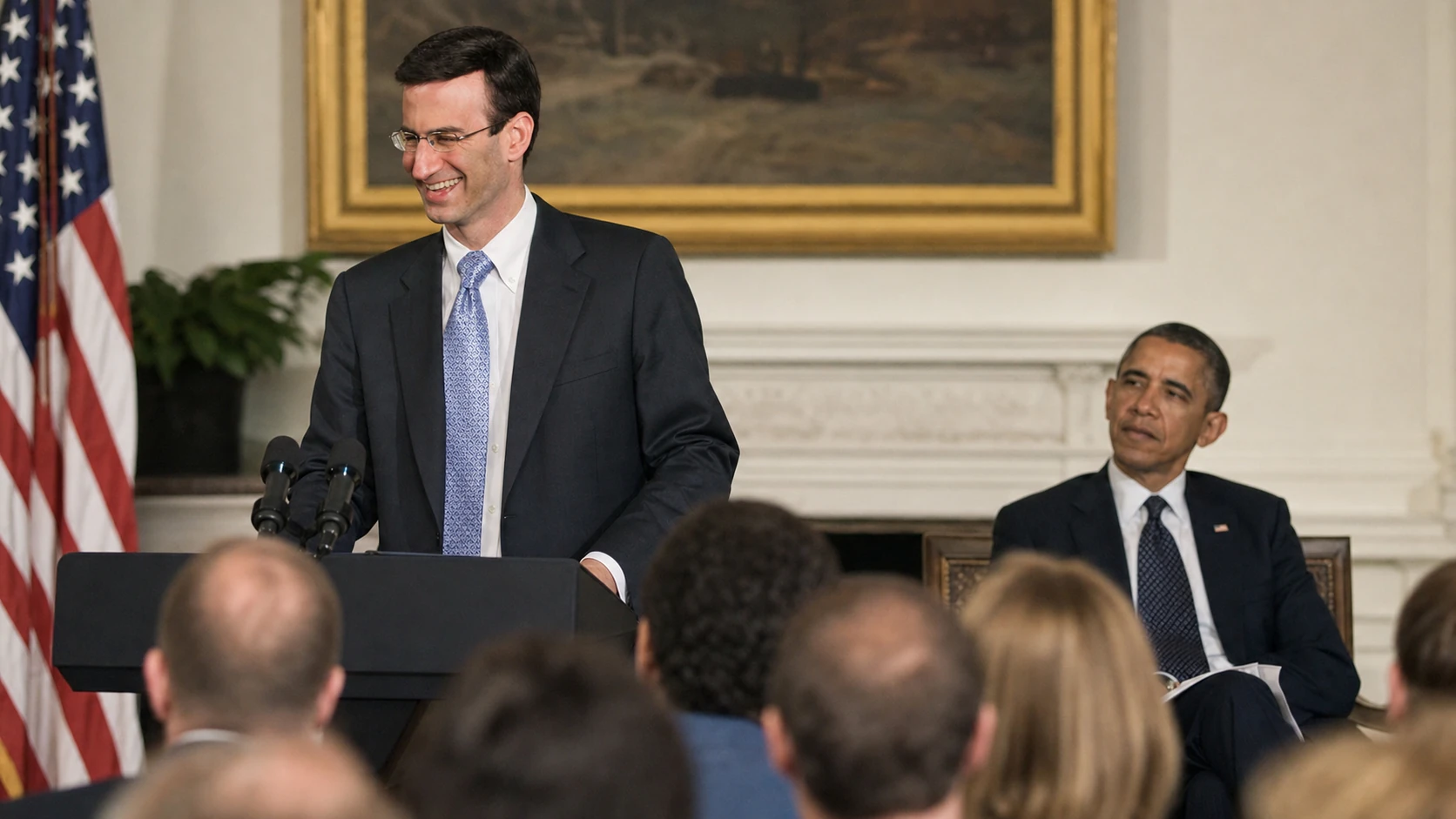
Orszag worked on the Obama administration’s economic recovery program, federal spending priorities, and health-care reform efforts. He supported the view that reducing waste and slowing medical-cost growth were central to long-term fiscal stability. His background at the CBO made him especially useful during negotiations over the budget impact of the Affordable Care Act.
His White House years brought attention beyond policy circles. Journalists covered his personal style, relationships, family, and appearance with an intensity rarely directed at a budget official. That period created the lasting online interest in the phrase “Peter Orszag bald,” even though his hair had no connection to his public work.
Orszag left the Obama administration in July 2010. His departure came after roughly a year and a half in one of the government’s most demanding economic posts. He returned briefly to Brookings before moving into private-sector finance.
Why People Search “Peter Orszag Bald”
The baldness question began largely as a product of political gossip and humorous media commentary. During Orszag’s rise in Washington, some blogs and opinion writers mocked his sharply styled dark hair and suggested that he might wear a toupee. These comments were based on photographs and personal impressions, not verified information.

One widely repeated story quoted a hairpiece seller who was asked to comment on pictures of Orszag. The seller had not treated, fitted, or personally examined him. His opinion was therefore a reaction to selected images rather than firsthand evidence.
Recent official portraits show Orszag with short gray hair across his scalp. He does not publicly appear with a fully shaved or bald head. Differences between older and newer images can be explained by age, graying, styling, lighting, camera quality, or ordinary changes in hair density.
There is no reliable public confirmation that Orszag wears a toupee or hair system. There is also no confirmed report that he has received a hair transplant or medical treatment for hair loss. The most accurate answer is that he currently appears with short gray hair, while more specific claims remain private and unverified.
Career at Citigroup
After leaving Washington, Orszag joined Citigroup in 2011. His move drew attention because it reflected the familiar path from senior government service into the financial industry. At Citi, he held leadership roles connected to investment banking, corporate strategy, and financial advice.
His government experience gave him a different background from many traditional bankers. He understood federal agencies, regulation, health policy, taxation, and the economic forces that shape large business decisions. Those skills became useful when advising corporations facing political and financial uncertainty.
The move also increased his earning power, though his exact compensation at Citigroup was not consistently made public. Reports and estimates about his salary have circulated, but no single figure should be treated as a complete account of his income or wealth.
Rise at Lazard
Orszag joined Lazard in 2016. Lazard is an international financial advisory and asset-management firm with a long history in mergers, acquisitions, restructuring, and strategic advice. He initially took on senior roles in investment banking and eventually led major parts of the advisory business.
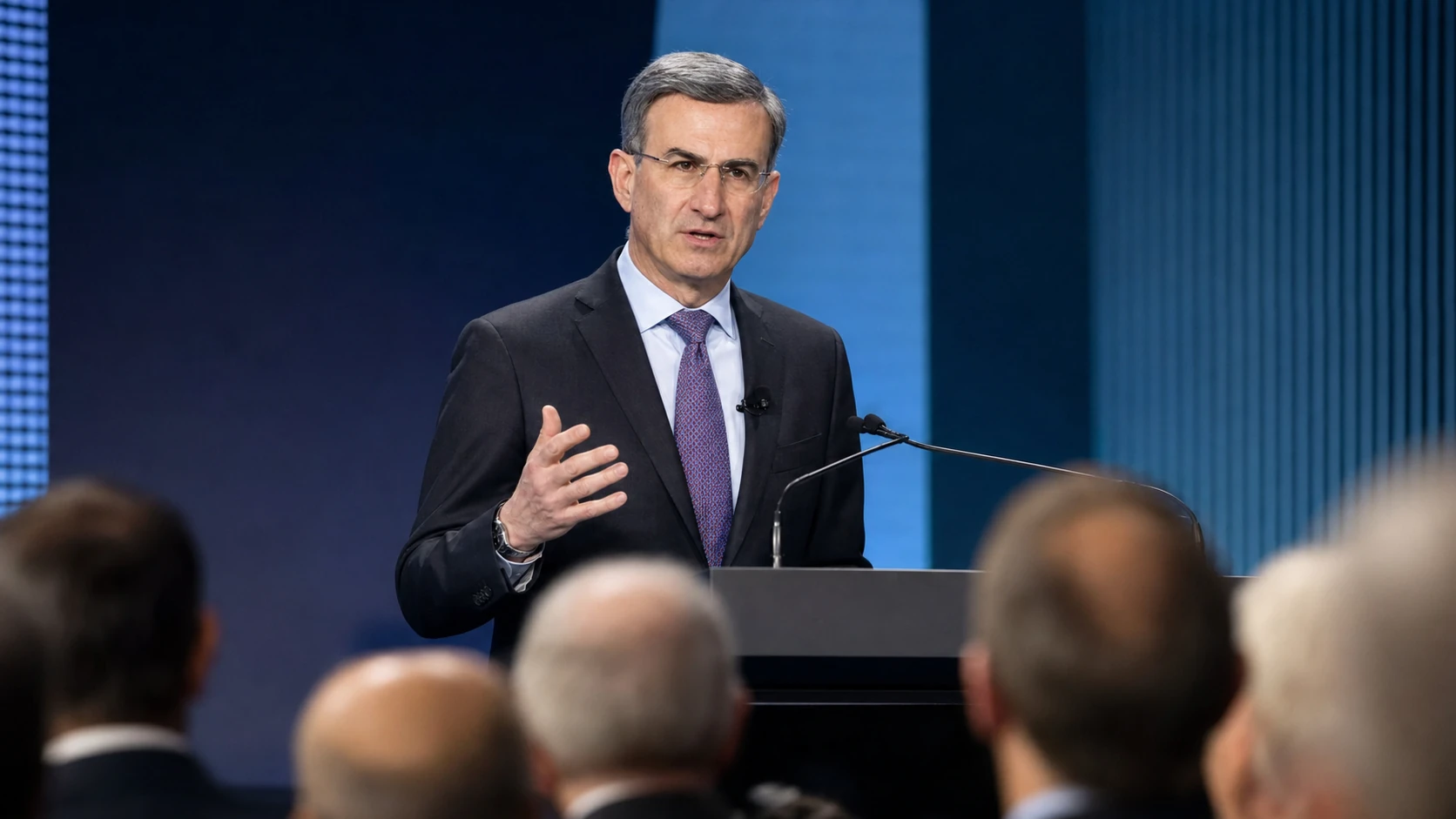
His responsibilities included work in health care, mergers and acquisitions, and North American financial advisory. The health-care focus matched his earlier policy expertise, allowing him to connect industry economics with regulatory and government concerns.
Lazard appointed Orszag chief executive effective October 1, 2023. He succeeded Kenneth Jacobs and became responsible for the firm’s global strategy, operations, advisory business, and asset-management activities. On January 1, 2025, he also became chairman of the board.
As CEO and chairman, Orszag has promoted a long-term growth plan often referred to as Lazard 2030. The strategy seeks to increase revenue, expand client relationships, strengthen asset management, and modernize the firm’s use of technology. Artificial intelligence has become a visible part of his public discussion about how financial firms may organize teams and serve clients.
Recent Work and Current Status
In 2024 and 2025, Orszag focused on strengthening Lazard’s advisory performance and setting targets for growth by 2030. The firm reported higher revenue during this period, including strong results from financial advisory. His leadership has been closely watched because the investment-banking industry has faced shifting interest rates, geopolitical tension, regulatory pressure, and uneven merger activity.
By 2026, Orszag remained Lazard’s CEO and chairman. He continued speaking publicly about artificial intelligence, changes in investment-banking staffing, and the growing need for companies to understand political risk. His view is that major transactions now often require knowledge of government and regulation as well as traditional financial analysis.
That approach reflects the full arc of his career. He has worked in economic research, the White House, Congress, global banking, and corporate leadership. Few financial executives have held such senior positions on both sides of the public-private divide.
Marriage, Children, and Private Life
Peter Orszag is married to journalist Bianna Golodryga. Golodryga has worked for major American news organizations, including ABC, CBS, Yahoo News, and CNN. The couple married in 2010 and have appeared together at public events, though they keep much of their home life private.
They have children together, and Orszag also has children from earlier relationships. Public reporting has described him as the father of several children, but the family has not made every detail of their lives widely public. Their names, education, and personal activities should be treated with care, especially where they are not public figures.
Before marrying Golodryga, Orszag was married to Cameron Kennedy. Their marriage ended in divorce. His personal life attracted heavy media coverage around the time he served in the Obama administration, but he has since presented a far more controlled public image focused on work and family.
The couple lives in New York City. Golodryga’s television career and Orszag’s financial leadership make them a prominent professional couple, but neither has turned their marriage into a major public brand.
Net Worth and Income Sources
Peter Orszag’s exact net worth is not publicly confirmed. Online estimates vary widely and often lack documentation, so precise claims should be treated with caution. His wealth is likely tied to decades of senior employment in government, banking, consulting, writing, speaking, and executive leadership.
Government service would have provided a public salary but not the level of compensation available in finance. His later roles at Citigroup and Lazard likely became his main sources of income. As CEO and chairman of a publicly traded financial firm, his compensation may include salary, bonuses, stock awards, and other incentives disclosed through corporate filings.
Some websites publish multimillion-dollar estimates for Orszag’s net worth, but there is no reliable public record that confirms a single total. Assets, investments, property, taxes, liabilities, and family finances are private. A responsible profile can say that he is a highly paid financial executive without pretending to know his precise personal fortune.
He has also earned income from books, articles, academic work, and speaking engagements. These activities add to his professional profile, though they are unlikely to exceed the value of his senior private-sector compensation.
Books, Writing, and Policy Influence
Orszag has written and co-written books and policy papers on economics, retirement, health care, and government spending. His work has appeared in major newspapers, journals, and policy publications. He has also held academic and research affiliations alongside his business career.
One of his recurring arguments is that government policy should pay closer attention to evidence, long-term costs, and behavioral economics. He has supported automatic enrollment in retirement plans and other systems designed to help people make beneficial choices without requiring constant action.
His writing has kept him connected to public policy even after moving to Wall Street. He continues to comment on economic growth, health spending, government performance, artificial intelligence, and the relationship between politics and business.
Public Reputation
Orszag’s supporters see him as a highly trained economist who can connect technical research with practical decisions. His government record gave him credibility on federal budgets, while his business career showed an ability to move into high-level financial leadership.
Critics have questioned the movement of senior officials into banking and the influence of Wall Street on public policy. Orszag’s transition from the Obama administration to Citigroup became part of that broader debate. The criticism concerned the system of government-to-industry career movement rather than evidence that he had broken the law.
His public image has changed over time. In Washington, he was sometimes treated as an unusually visible policy official whose personal life and appearance became tabloid material. At Lazard, he is presented as a corporate strategist, economist, and executive dealing with global financial issues.
Frequently Asked Questions
Is Peter Orszag bald?
Recent official photographs show Peter Orszag with short gray hair, so he does not appear fully bald. His hair may look thinner in some images because of lighting, age, camera angle, or styling, but no medical diagnosis has been made public.
Does Peter Orszag wear a toupee?
There is no reliable public confirmation that Peter Orszag wears a toupee. The claim originated in old media jokes and photograph-based speculation, not in a statement from Orszag or someone with direct knowledge.
How old is Peter Orszag?
Peter Orszag was born on December 16, 1968. He is 57 years old as of August 2026 and will turn 58 in December 2026.
What is Peter Orszag’s current job?
He is the chief executive officer and chairman of Lazard. He became CEO in October 2023 and chairman in January 2025.
Who is Peter Orszag’s wife?
Peter Orszag is married to journalist Bianna Golodryga. She is a television news anchor and correspondent who has worked for CNN and several other major media organizations.
How many children does Peter Orszag have?
Public reporting indicates that Orszag is the father of several children from his marriage and earlier relationships. Some details about the children remain private and are not consistently confirmed in authoritative public biographies.
What is Peter Orszag’s net worth?
His exact net worth is not publicly confirmed. He has likely accumulated substantial wealth through senior roles at Citigroup and Lazard, but online estimates should be treated as speculative unless supported by reliable financial records.
Conclusion
Peter Orszag’s appearance has generated an oddly persistent search question, but the available evidence is limited and clear. He appears in current photographs with short gray hair, and claims about a toupee, transplant, or medical condition remain unconfirmed.
His public importance comes from a career spent close to economic power. He led the Congressional Budget Office, managed the White House budget process during a financial crisis, worked in senior banking roles, and now directs Lazard as CEO and chairman.
Orszag’s path also reflects the close relationship between government, policy research, and finance in the United States. That connection has brought him influence, opportunity, and criticism, while his analytical style has remained central to his reputation.
The “Peter Orszag bald” search may lead readers to his profile, but it offers only a small and speculative part of the story. His lasting public identity rests on economics, institutional leadership, and decisions that affect far more than his appearance.